什么是耗散因数?
What is the dissipation factor?
The dissipation factor is an electrical test that helps determine the overall condition of insulation materials.
Double-electric materials are poor conductors of electricity, but effective supporters of electrostatic fields. When an electrically insulating material is subjected to an electrostatic field, the opposing charges in the double-electric material form a bipolar structure.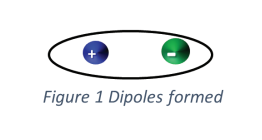
A capacitor is an electrical device that stores electrical charge by placing a dielectric material between conductive plates. The ground wall insulation (GWI) system between the motor windings and the motor frame forms a natural capacitor. The traditional method for testing the GWI is to measure its resistance to ground.
This is a very valuable measurement method that can be used to identify weak points in insulation materials, but it cannot determine the overall condition of the entire GWI system.
The dissipation factor provides additional information about the overall state of the Global Environment Facility.
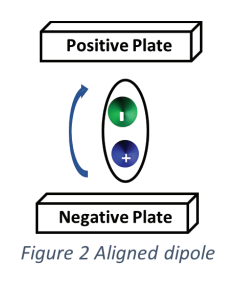
In its simplest form, when a dielectric material is subjected to a DC magnetic field, the dipoles in the medium will shift and align, with the negative pole of the dipole being attracted to the positive plate and the positive pole being attracted to the negative plate.
Some of the current flowing from the source to the conductive plate aligns the dipoles and generates losses as heat, while some current leaks through the dielectric. This current is resistive and consumes energy; this is the resistive current IR. The remaining
current is stored in the plate current and returned to the system; this stored current is the capacitor current of the IC.
When subjected to an alternating electric field, these dipoles periodically shift as the polarity of the electrostatic field changes from positive to negative. This shift of the dipoles generates heat and consumes energy.
Simply put, the current that causes the dipole to shift and leak through the dielectric is resistive infrared, while the current stored to keep the dipole in a constant state is capacitive infrared.
The dissipation factor (DF) is the ratio of resistive current IR to capacitive current IC. This test is widely used in electrical equipment such as motors, transformers, circuit breakers, generators, and cables to determine the capacitive characteristics of winding and conductor insulation materials. As the GWI degrades over time, its resistance increases, leading to an increase in IR. Insulation contamination further alters the dielectric constant of the GWI, making alternating current more resistive than capacitive, which also increases the dissipation factor. The dissipation factor of new, clean insulation is typically 3-5%, and a DF greater than 6% indicates a change in the insulation conditions of the equipment.
When moisture or contaminants are present in the insulation around the GWI or even the windings, it can cause changes in the chemical composition of the dielectric material that serves as the equipment insulation. These changes can lead to variations in DF (displacement density) and capacitance to ground.
An increase in the dissipation factor indicates a change in the overall condition of the insulation. Comparing DF and capacitance to ground helps determine the condition of the insulation system over time. Measuring the dissipation factor at excessively high or low temperatures can lead to unbalanced results and introduce errors into calculations.
IEEE Standard 286-2000 recommends testing at or around an ambient temperature of 77 degrees Fahrenheit or 25 degrees Celsius.