
การค้นหาข้อผิดพลาดของมอเตอร์ 3 เฟส: คู่มือ
Electric motors are vital to manufacturing and processing operations worldwide. Maintaining these motors in good working condition and ensuring efficient operation should be a top priority for any business.
Three-phase motors use three currents to power their internal electrical components, such as the stator, rotor, windings, and cables. When a motor malfunctions, its components must be analyzed to identify the exact location of the problem and resolve it.
Understanding the basics of how a 3-phase motor works.
The heart of a three-phase motor lies in the complex interaction between its stator and rotor components.
The stator consists of three windings. When three-phase alternating current is supplied, it creates a rotating magnetic field. This rotating field induces an electric current in the rotor, which in turn creates its own magnetic field. The interaction between these magnetic fields generates torque that drives the motor’s rotation.
The speed of a three-phase motor is determined by the voltage frequency and the number of poles in the motor’s design. By adjusting the frequency, operators can precisely control the motor speed, enabling fine-tuning of industrial processes.
Three-phase motors offer several advantages over single-phase motors, including higher efficiency, greater starting torque, and more balanced power distribution. These characteristics make them the preferred choice for a wide range of industrial applications, from pumps and compressors to conveyor belts and cranes.
ขั้นตอนการค้นหาความผิดปกติของมอเตอร์ 3 เฟส
การวินิจฉัยและแก้ไขปัญหาเกี่ยวกับมอเตอร์ 3 เฟสอาจเป็นงานที่ซับซ้อน แต่ด้วยเครื่องมือและเทคนิคที่เหมาะสม คุณจะสามารถระบุและแก้ไขสาเหตุที่แท้จริงของข้อผิดพลาดทั่วไปที่นำไปสู่ความล้มเหลวของมอเตอร์ได้อย่างมีประสิทธิภาพ
การตรวจสายตา
ขั้นแรก ตรวจสอบสภาพทางกายภาพของมอเตอร์ การเชื่อมต่อ และสภาพแวดล้อมโดยรอบอย่างรอบคอบ เรามักจะพบปัญหาที่ชัดเจนที่อาจมีส่วนทำให้เกิดปัญหาได้
การวิเคราะห์ส่วนประกอบไฟฟ้าภายใน
หากไม่มีความเสียหายหรือปัญหาที่ชัดเจนกับมอเตอร์และสายเคเบิล ขั้นตอนต่อไปคือการใช้อุปกรณ์ทดสอบพิเศษเพื่อวัดพารามิเตอร์ เช่น ความต้านทานของขดลวด ความต้านทานของฉนวน และการดึงกระแสไฟฟ้า การวัดเหล่านี้จะให้ข้อมูลเชิงลึกอันมีค่าเกี่ยวกับสุขภาพภายในของมอเตอร์ และช่วยให้เราระบุข้อผิดพลาดทางไฟฟ้าได้
การวิเคราะห์ทางกล
สุดท้าย ขั้นตอนที่สามของกระบวนการค้นหาข้อผิดพลาดของเราเกี่ยวข้องกับการทดสอบแบบไดนามิก โดยจะสังเกตประสิทธิภาพของมอเตอร์ภายใต้โหลด ด้วยการตรวจสอบความเร็ว การสั่นสะเทือน และพารามิเตอร์การทำงานอื่นๆ ของมอเตอร์ เราสามารถระบุปัญหาทางกลไกที่อาจส่งผลกระทบต่อประสิทธิภาพและความน่าเชื่อถือของมอเตอร์ได้
เครื่องมือและเทคโนโลยีวิเคราะห์มอเตอร์ไฟฟ้า
เมื่อพูดถึงการบำรุงรักษาและการแก้ไขปัญหามอเตอร์ 3 เฟส การมีเครื่องมือและความรู้ที่เหมาะสมเป็นสิ่งสำคัญ
มัลติมิเตอร์
หนึ่งในเครื่องมือทั่วไปที่ใช้ในการวินิจฉัยมอเตอร์คือมัลติมิเตอร์
มัลติมิเตอร์ช่วยให้คุณสามารถวัดพารามิเตอร์ทางไฟฟ้าที่สำคัญ เช่น แรงดัน กระแส และความต้านทานทั่วทั้งขดลวดของมอเตอร์
อย่างไรก็ตาม การวัดพารามิเตอร์เหล่านี้มักจะมองข้ามข้อผิดพลาดที่อาจเกิดขึ้นกับเครื่องมืออื่นๆ ที่ใช้วัดอิมพีแดนซ์ ตัวเหนี่ยวนำ มุมเฟส และความถี่กระแส
เมกะโฮมมิเตอร์
เครื่องมือทั่วไปอีกอย่างหนึ่งที่ใช้ในการวิเคราะห์มอเตอร์คือเมกโอห์มมิเตอร์
เมกโอห์มมิเตอร์เป็นมิเตอร์ไฟฟ้าที่ใช้วัดค่าความต้านทานที่สูงมากโดยการส่งสัญญาณไฟฟ้าแรงสูงไปยังวัตถุที่กำลังทดสอบ
เมกโอห์มมิเตอร์เป็นวิธีที่ง่ายและรวดเร็วในการตรวจสอบสภาพของฉนวนบนสายไฟ เครื่องกำเนิดไฟฟ้า และขดลวดมอเตอร์
อย่างไรก็ตาม การทดสอบฉนวนเมกโอห์มมิเตอร์จะตรวจจับเฉพาะข้อผิดพลาดที่ลงกราวด์เท่านั้น เนื่องจากความล้มเหลวของขดลวดไฟฟ้าของมอเตอร์เพียงบางส่วนเท่านั้นที่เริ่มต้นจากความผิดปกติของกราวด์ ความผิดปกติของมอเตอร์จำนวนมากจะไม่ถูกตรวจพบโดยใช้วิธีนี้เพียงอย่างเดียว
การทดสอบไฟกระชาก
การทดสอบไฟกระชากจะทำให้ระบบมีแรงดันไฟกระชากที่ด้านบนของอินพุตแรงดันไฟฟ้าที่กำหนด เพื่อระบุจุดอ่อนของฉนวน
ควรหลีกเลี่ยงการทดสอบไฟกระชากสำหรับการวิเคราะห์มอเตอร์ เนื่องจากอาจเป็นอันตรายต่อขดลวดภายในได้
การวิเคราะห์วงจรมอเตอร์ (MCA™)
การวิเคราะห์วงจรมอเตอร์ (MCA™) เป็นวิธีการทดสอบแบบไม่ทำลายและขจัดพลังงานเพื่อประเมินความสมบูรณ์ของมอเตอร์
เริ่มต้นจากศูนย์ควบคุมมอเตอร์ (MCC) หรือที่ตัวมอเตอร์โดยตรง กระบวนการนี้จะประเมินส่วนไฟฟ้าทั้งหมดของระบบมอเตอร์ รวมถึงการเชื่อมต่อและสายเคเบิลระหว่างจุดทดสอบและมอเตอร์
Issue | Meg-ohm Meter | Multi-Meter | ALL-TEST PRO 7 |
Ground Faults |
|
|
|
Internal Winding Faults |
|
|
|
Open Connection |
|
|
|
Rotor Faults |
|
|
|
Contamination |
|
|
|


การวิเคราะห์ลายเซ็นไฟฟ้า (ESA)
การวิเคราะห์ลายเซ็นไฟฟ้า (ESA) ซึ่งครอบคลุมทั้งการวิเคราะห์ลายเซ็นแรงดันไฟฟ้าของมอเตอร์ (MVSA) และการวิเคราะห์ลายเซ็นกระแสไฟฟ้าของมอเตอร์ (MCSA) เป็นวิธีการทดสอบที่มีพลังงานซึ่งจับรูปแบบแรงดันไฟฟ้าและกระแสไฟฟ้าในขณะที่ระบบมอเตอร์กำลังทำงาน
Power testing provides valuable data for AC and DC electric motors, generators, wound rotor motors, synchronous motors, machine tool motors, and more.
Preventive maintenance to avoid failure of 3-phase motors.
Proper preventative maintenance is crucial in avoiding costly 3-phase motor failures. By taking a proactive approach, you can extend motor life and minimize unplanned downtime.
Condition inspection
One crucial step in preventative maintenance is regular inspection. Inspect your three-phase motors closely for signs of wear and tear, such as bearing problems, insulation degradation, and imbalances.
Scheduled evaluation of rotating machinery using motor cycle analysis should be performed to monitor conditions over time. Early detection and correction of faults, before motor failures occur, can be crucial for business productivity.
environment
Equally important is maintaining optimal operating conditions. Ensure your motor is not overloaded, has proper ventilation, and operates at the correct voltage and frequency. Neglecting these factors can significantly lead to premature motor failure.
Predictive maintenance
Furthermore, the use of a comprehensive predictive maintenance program, including electrical signature analysis, vibration analysis, and thermal imaging, provides valuable information to identify potential problems before they occur. This data-driven approach enables businesses to make informed decisions and proactively schedule maintenance.
Summary
Because the motor’s complex components are protected internally, troubleshooting three-phase faults is a difficult but possible task with the right approach and tools.
Don’t let three-phase motor problems get the better of you. Invest in the right tools and techniques, and you can keep your vital equipment running smoothly for many years to come.
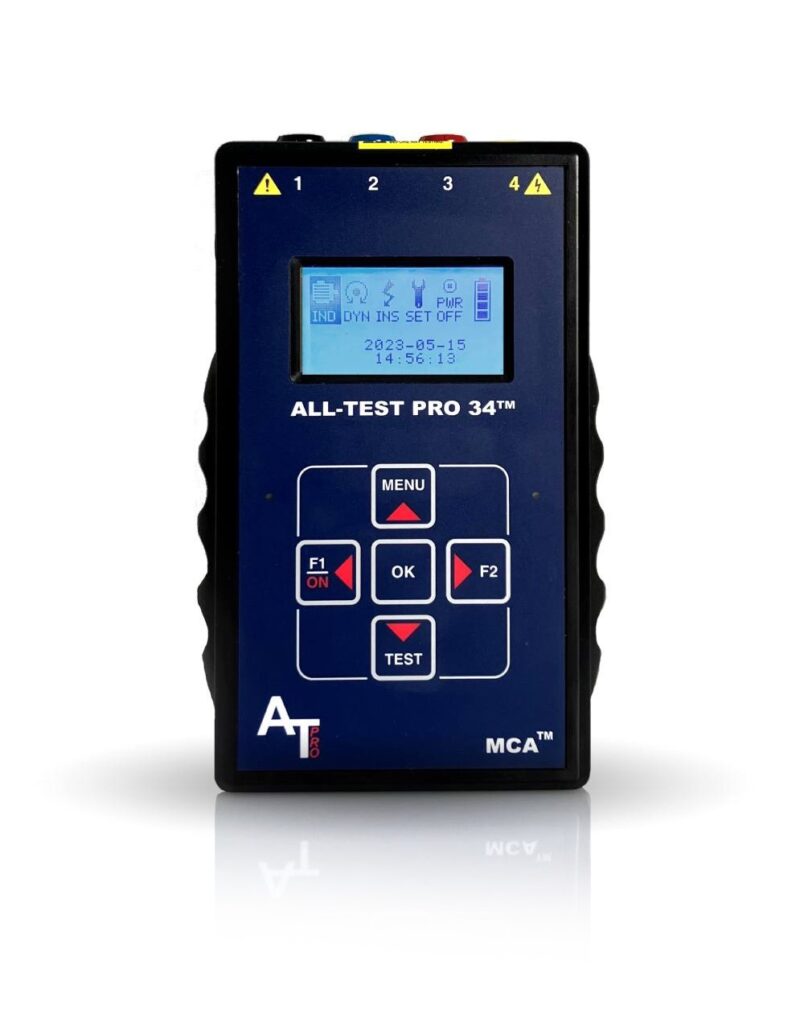
AT34™
วิเคราะห์และแนวโน้มความสมบูรณ์ของส่วนประกอบมอเตอร์สำหรับความผิดปกติของกราวด์ ความผิดปกติของขดลวดภายใน การเชื่อมต่อแบบเปิด และการปนเปื้อน – ทั้งหมดนี้ทำได้ด้วยอุปกรณ์มือถือเครื่องเดียว