
Localización de averías en motores trifásicos: Guía
Electric motors are the backbone of many manufacturing and processing operations worldwide. Keeping these motors in good condition and running efficiently should be every company’s number one priority.
Three-phase motors use three electrical currents to power their internal electrical components, such as the stator, rotor, windings, and wiring. When a motor malfunctions, its components must be analyzed to pinpoint the exact location of the problem.
Understanding the fundamentals of how three-phase motors work
At the heart of a three-phase motor lies the intricate interaction between the stator and rotor components.
The stator, composed of three windings, creates a rotating magnetic field when supplied with three-phase alternating current. This rotating field induces a current in the rotor, which in turn generates its own magnetic field. The interaction between these magnetic fields produces the torque that drives the motor’s rotation.
The speed of a three-phase motor is determined by the frequency of the supply voltage and the number of poles in the motor design. By adjusting the frequency, operators can precisely control the motor speed, enabling accurate control of industrial processes.
Three-phase motors offer several advantages over their single-phase counterparts, such as greater efficiency, higher starting torque, and a more balanced power distribution. These characteristics make them the preferred choice for a wide range of industrial applications, from pumps and compressors to conveyor belts and cranes.
Steps to locate faults in three-phase motors
Diagnosing and troubleshooting three-phase motors can be a complex task, but with the right tools and techniques, you can effectively identify and address the root causes of common faults that lead to motor failure.
Visual examination
First, carefully examine the physical condition of the motor, its connections, and the surrounding environment; we can often discover obvious issues that may be contributing to the problem.
Analysis of internal electrical components
Si no hay daños o problemas evidentes en el motor y su cableado, el siguiente paso es utilizar equipos de prueba especializados para medir parámetros como la resistencia del bobinado, la resistencia del aislamiento y el consumo de corriente. Estas mediciones proporcionarán información valiosa sobre la salud interna del motor y nos ayudarán a localizar cualquier fallo eléctrico.
Análisis mecánico
Por último, la tercera fase de nuestro proceso de localización de fallos consiste en realizar pruebas dinámicas, en las que se observa el rendimiento del motor bajo carga. Controlando la velocidad, las vibraciones y otros parámetros de funcionamiento del motor, podemos identificar cualquier problema mecánico que pueda estar afectando a su eficacia y fiabilidad.
Herramientas y tecnologías de análisis de motores eléctricos
Cuando se trata de mantener y localizar averías en motores trifásicos, es crucial disponer de las herramientas y los conocimientos adecuados.
Multímetros
Uno de los instrumentos más utilizados para diagnosticar motores es un multímetro.
Los multímetros te permiten medir parámetros eléctricos cruciales, como la tensión, la corriente y la resistencia en los bobinados del motor.
Sin embargo, las mediciones de estos parámetros suelen pasar por alto fallos que se pueden encontrar con otros instrumentos que miden la impedancia, la inductancia, el ángulo de fase y la frecuencia de la corriente.
Meghommeters
Otra herramienta habitual en el análisis de motores es el megóhmetro.
Un megaóhmetro es un medidor eléctrico que mide valores de resistencia muy altos enviando una señal de alto voltaje al objeto que se está comprobando.
Los megaohmímetros proporcionan una forma rápida y sencilla de determinar el estado del aislamiento de cables, generadores y bobinados de motores.
Sin embargo, las pruebas de aislamiento con megóhmetro sólo detectan los fallos a tierra. Dado que sólo una parte de los fallos de los devanados eléctricos de los motores comienzan como fallos a tierra, muchos fallos del motor pasarán desapercibidos utilizando únicamente este método.
Pruebas de sobretensión
Una prueba de sobretensión somete al sistema a picos de tensión por encima de la tensión nominal de entrada para determinar los puntos débiles del aislamiento.
La prueba de sobretensión debe evitarse para el análisis de motores, porque puede ser destructiva para los bobinados internos.
Análisis del circuito del motor (MCA™)
El Análisis del Circuito del Motor (MCA™ ) es un método de prueba no destructivo y desenergizado para evaluar el estado de un motor.
Iniciado desde el Centro de Control del Motor (CCM) o directamente en el propio motor, este proceso evalúa toda la parte eléctrica del sistema del motor, incluidas las conexiones y los cables entre el punto de prueba y el motor.
Issue | Meg-ohm Meter | Multi-Meter | ALL-TEST PRO 7 |
Ground Faults |
|
|
|
Internal Winding Faults |
|
|
|
Open Connection |
|
|
|
Rotor Faults |
|
|
|
Contamination |
|
|
|


Análisis de firmas eléctricas (ESA)
Electrical signature analysis (ESA), which encompasses both motor voltage signature analysis (MVSA) and motor current signature analysis (MCSA), is an energized testing method in which voltage and current waveforms are captured while the motor system is in operation.
Energized testing provides valuable information for AC and DC induction motors, generators, wound-rotor motors, synchronous motors, machine tool motors, etc.
Preventive maintenance to avoid breakdowns in three-phase motors
Proper preventative maintenance is crucial to avoid costly three-phase motor failures. By taking a proactive approach, you can extend the lifespan of your motors and minimize unexpected downtime.
Control of conditions
One of the key steps in preventative maintenance is regular inspections. Closely monitor your three-phase motors for signs of wear, such as bearing problems, insulation degradation, and imbalances.
Scheduled assessments of rotating machinery using Motor Circuit Analysis should be performed to monitor conditions over time. Identifying and resolving faults early, before motor failure, can be critical to a company’s production.
Environment
Equally important is maintaining optimal operating conditions. Ensure your motors are not overloaded, are well-ventilated, and are operating at the correct voltage and frequency. Neglecting these factors can significantly contribute to premature motor failure.
Predictive maintenance
Furthermore, implementing a comprehensive predictive maintenance program, including electrical signature analysis, vibration analysis, and thermography, provides valuable data for identifying potential problems before they arise. This data-driven approach allows companies to make informed decisions and proactively schedule maintenance.
Conclusion
Since the intricate components of an engine are shielded inside, locating three-phase faults is a complicated but possible task with the right approach and tools.
Don’t let three-phase motor problems catch you off guard. Invest in the right tools and techniques, and you can keep your critical equipment running smoothly for years to come.
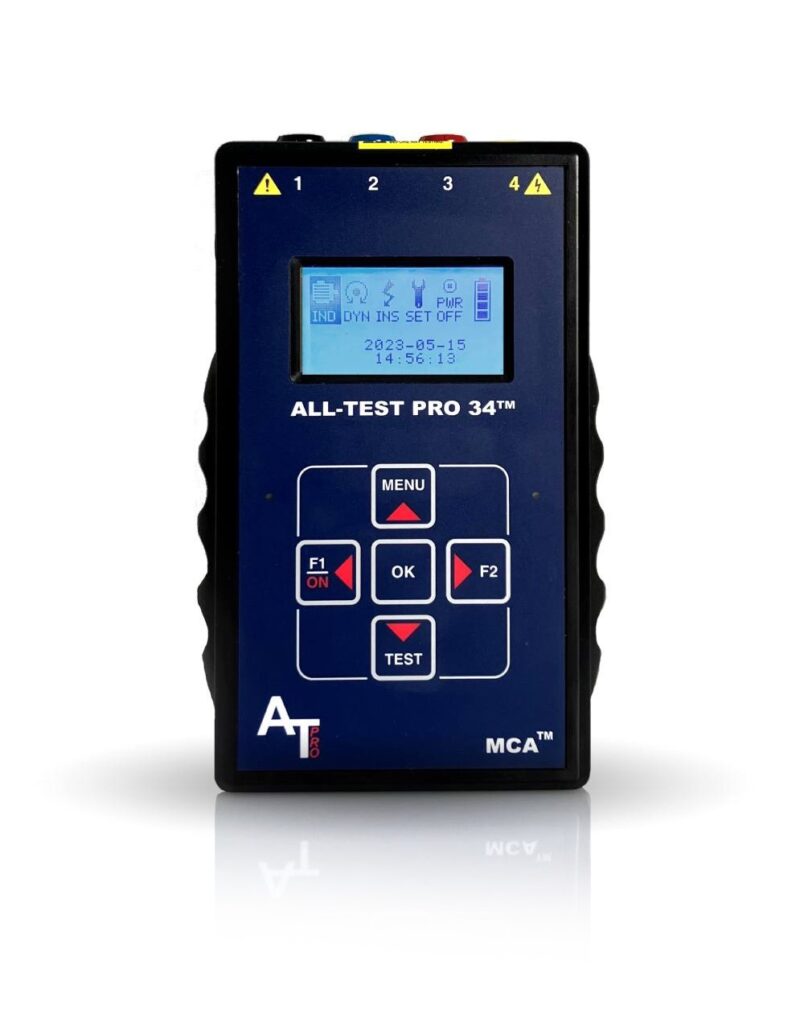
AT34™
Analice y establezca tendencias de la integridad de los componentes del motor para detectar fallos a tierra, fallos en los devanados internos, conexiones abiertas y contaminación, todo ello con un dispositivo portátil.

Seminario online de diagnóstico de motores de primera clase – Nivel 1 – 12-16 de junio
¿Te has enterado? Del 12 al 16 de junio celebraremos nuestro Seminario de Diagnóstico de Motores de Primera Clase Nivel 1. Será un seminario online/virtual que comenzará cada día a […]

Preconlub 15-16 junio 2023 León, México
Acompañe a Gloria Urizar, Gerente Regional de ATP LATAM, en su presentación en Preconlub 2023. Más información: https://www.preconlub.com/ Gloria Urizar Director Regional – […]