电机诊断:多技术方法
Introduction
There’s a persistent misconception that there’s a “magic bullet” in the form of condition-based monitoring (CBM) instruments that can provide all the information you need to assess the health of your motor systems. This misconception often stems from the marketing pitches of these CBM instrument manufacturers or sales teams. It’s very much the salesperson’s job to focus on the strengths of their specific instrument and present it as “the only solution you’ll need to solve all your problems.”
In reality, no single tool can provide you with every piece of information you need. There is no “holy grail” for establishing trust and reliability. However, through understanding the motor system and the capabilities of CBM technology, you can gain a comprehensive view of your system, its health status, and confidently estimate the time to failure, enabling you to make sound recommendations to management.
The purpose of this article is simple: to outline the components of an electric motor system; to discuss the failure modes of each major component; to discuss how each major technology addresses each component; to discuss how to integrate technologies into a complete view of the system; and, to discuss the bottom-line impact of multi-technology approaches. The trust-building equipment types to be reviewed are standard off-the-shelf technologies used for periodic testing.
electric motor system
The electric motor system involves much more than just the motor itself. In fact, it consists of six different parts, each with its own failure mode. These parts are (Figure 1):
- The facility’s power distribution system, including wires and transformers.
- Start the system.
- Electric motor – For the purposes of this article, a three-phase induction motor is used.
- Mechanical connections can be direct, gearbox, belt, or other methods. For the purposes of this article, we will focus on direct coupling and belts.
- A load refers to a driven device, such as a fan, pump, compressor, or other driven equipment.
- The process includes wastewater pumping, mixing, and aeration.
When performing fault diagnosis, trend analysis, debugging, or other system-related reliability-based functions, most people examine the individual components of the system. Which parts are the focus depends on several factors, including:
- What are the experience and background of the relevant personnel and managers? For example, when maintenance personnel are primarily mechanical, you will most often see projects involving strong vibrations, while when personnel are primarily electrical, it will be projects involving infrared radiation.
- This is considered a failure area. This could be a serious problem, depending on how you look at the musculoskeletal system, and deserves further attention.
- Learn about various coalbed methane technologies.
- Training. But since when has training ceased to be an issue?
When reviewing the history of your motor system, the perceived area of failure presents a particularly serious problem. Often, when records are generated, the only summary might say something like, “Fan failure, repaired” or “Pump failure, repaired.” The end result is that the failure is attributed to the pump or fan component of the motor system. This becomes especially problematic when relying on memory to answer the most serious problem that needs to be addressed in the plant, based on history. For example, when trying to determine which part of a plant is causing the most problems, the answer might be: “Wastewater pump 1.” The immediate intuition is that the pump has a persistent problem, and since the pump is a mechanical system, a mechanical monitoring solution might be chosen to predict the pump’s health. If the root cause of each failure is documented, it might be identified as a problem with the motor windings, bearings, cables, controls, process, or a combination of various issues.
在最近的一次会议上,在讨论煤层气设备的选择时,与会者被要求提供他们所在地的故障模式。 答案是风扇、压缩机和泵。 当进一步讨论时,发现风机的轴承和电机绕组故障是最常见的,泵的密封和电机轴承,以及压缩机的密封和电机绕组。 如果再仔细观察,绕组故障与控制和电缆问题、不适当的维修和电能质量有关。 轴承问题与不适当的润滑做法有关。
实际上,当确定在你的电动机系统上实施CBM的最佳方式时,你需要从系统而不是部件的角度来考虑。 其结果很简单:提高了可靠性;减少了令人头痛的问题;以及,提高了底线。
基于条件的监测测试仪器
以下是一些比较常用的CBM技术,关于这些技术的更多细节可以在 “电机电路分析 “中找到。1 关于测试的系统组件和能力的细节可以在本文末尾的表1-4中找到:
去掉能量的测试:
1 电机电路分析:理论、应用和 能源分析霍华德-W-彭罗斯,博士,SBD出版社,ISBN:0-9712450-0-2,2002。
- 直流高电位测试–通过施加两倍于电机额定电压的电压,加上1000伏的交流电压,以及额外的1.7倍的直流高电位值(通常有一个倍数,以减少对绝缘系统的压力),对电机绕组和地面之间的绝缘系统(地壁绝缘)进行评估。 该测试被广泛认为具有潜在的破坏性。
- 浪涌比较测试:使用与高电位测试相同的计算值的电压脉冲,以图形方式比较电机各相的阻抗。 测试的目的是检测每相前几圈内的短路匝数。 该测试通常在制造和复卷应用中进行,因为它最好在定子中没有转子的情况下进行。 这种测试被广泛认为具有潜在的破坏性,主要作为一种去/不去的测试,没有真正的趋势能力。
- 绝缘测试器:该测试在绕组和地之间放置一个直流电压。 低电流泄漏的测量和转换为兆、吉或太欧的测量。
- 极化指数测试:使用绝缘测试仪,查看10分钟到1分钟的数值,并产生一个比率。 根据IEEE 43-2000,超过5000兆欧的绝缘值不需要用PI进行评估。 该测试用于检测严重的绕组污染或过热的绝缘系统。
- 欧姆、毫欧姆测试:使用欧姆或毫欧姆表,测量并比较电动机绕组间的数值。 这些测量通常是为了检测松动的连接、断裂的连接和非常晚期的绕组故障。
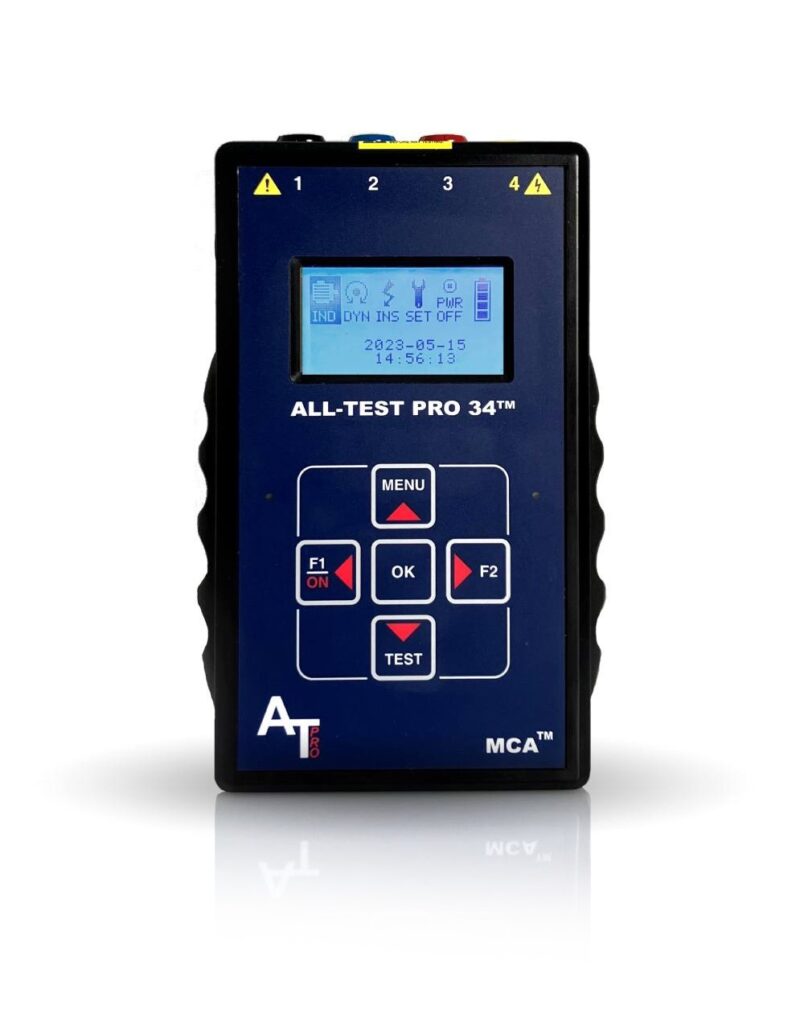
- 电机电路分析(MCA)测试:使用电阻、阻抗、电感、相位角、电流:频率响应和绝缘测试的仪器可以用来排除故障、调试和评估控制、连接、电缆、定子、转子、气隙和对地绝缘健康状况。 使用一个低电压输出,通过一系列电桥读取读数并进行评估。 非破坏性和趋势性的读数往往在电气故障前几个月就已经出现。
2 潜在的破坏性:任何通过错误应用或完成削弱的绝缘条件而可能改变设备运行状况的仪器应被视为具有潜在的破坏性。
通电测试:
振动分析:通过传感器测量机械振动,提供整体振动值和FFT分析。 这些数值提供了机械故障和故障程度的指标,可以进行趋势分析,并将提供一些电气和转子问题的信息,这些问题根据电机的负载而变化。 电动机的最低负载要求,以检测转子的故障。 要求对被测试的系统有一定的了解。
红外线分析提供了关于物体之间温度差异的信息。 根据故障程度来检测故障并形成趋势。 对检测松动的连接和其他电气故障有很好的效果,对检测机械故障有一定的能力。 读数将随负载而变化。 要求对被测试的系统有一定的了解。
超声波仪器测量低频和高频的噪音。 将检测各种电气和机械问题,接近故障的后期阶段。 读数将随负载而变化。 要求对被测试的系统有一定的了解。
电压和电流测量将提供关于电机系统状况的有限信息。 读数将随负载而变化。
电机电流特征分析(MCSA)使用电机作为传感器,通过电机系统的很大一部分检测电气和机械故障。 MCSA通常被用作去/不去测试,确实有一些趋势能力,但通常只在后期检测绕组故障和机械问题。 对负载变化很敏感,读数会根据负载而变化。 需要铭牌信息,许多系统需要转子条数、定子槽数和手动输入运行速度。
主要部件和故障模式
应审查来自电机系统各组成部分的一些主要问题,以提供对所发现的故障类型和用于检测的技术的理解。 作为一个概述,这可能不包括你可能遇到的所有故障模式。
来电
从输入电源到负载开始,必须解决的第一个领域是 来电和配电系统。 第一个问题领域是电能质量,然后是变压器。
与电动机系统有关的电能质量问题包括:
- 电压和电流谐波:电压限制在5%THD(总谐波失真),电流限制在3%THD。 电流谐波对电动机系统的危害潜力最大。
- 过电压和欠电压情况:电动机的设计操作不超过铭牌电压的+/-10%。
- 电压不平衡:是指相位之间的差异。 根据电机的设计,电压和电流不平衡之间的关系从几倍到几十倍的电流不平衡与电压不平衡的关系不等(可高达20倍)。
- 功率因数:功率因数离统一越低,系统必须使用更多电流来执行工作。 功率因数差的迹象还包括重型设备启动时灯光变暗。
- 过载的系统:基于变压器、电缆和电机的能力。 通常情况下,用电流测量来检测,也可以用热量来检测。
用于检测输入电源问题的主要工具是电能质量表、MCSA以及电压和电流表。 了解你的电能质量状况可以帮助识别大量的 “幻影 “问题。
变压器是电机系统的首批关键部件之一。 一般来说,变压器的问题比系统中的其他部件少。 然而,每个变压器通常要照顾到电动机以及其他系统中的多个系统。
常见的变压器问题包括(油浸式或干式变压器):
- 绝缘对地故障。
- 绕组短路。
- 松动的连接,和、
- 电气振动/机械松动
用于监测变压器健康状况的测试设备(在本文的仪器选择范围内)包括:
- MCA的接地、松动/破损的连接和短路。
- 电力质量和晚期故障的MCSA
- 对松动的连接进行红外分析
- 超声波技术检测松动和严重故障
- 用于绝缘对地故障的绝缘测试器。
MCC’s, Controls and Disconnects
电机控制或断开提供了电动马达系统的一些主要问题。 对于低压和中压系统,最常见的是:
- 松动的连接
- 接触不良,包括凹陷、损坏、烧毁或磨损
- 接触器上的启动器线圈坏了
- 坏的功率因数校正电容器,通常会导致显著的电流不平衡。
评估控制装置的测试方法包括红外线、超声波、电压/安培表、欧姆表和目视检查。 MCA、MCSA和红外线为故障检测和趋势分析提供了最精确的系统。
电缆 – 控制之前和之后
布线问题很少被考虑,因此,提供了一些最令人头痛的问题。 常见的电缆问题包括:
- 由于过载或老化导致的热故障
- 污染,这在通过地下管道的电缆中可能更加严重
- 相位短路也可能发生,也可能发生接地。 这些可能是由 “树化 “或物理损害造成的。
- 由于物理损坏或其他原因而打开。
- 物理损坏往往是与其他电缆问题结合在一起的问题。
用MCA、红外线、绝缘测试和MCSA进行测试和趋势分析。
电机供应方总结
在对电机的供应方面,问题可以细分如下:
- 功率因数差 – 39%
- 连接不良 – 36%
- 尺寸过大的导体 – 10%
- 电压不平衡 – 7%
- 低电压或过电压情况 – 8%
涵盖这些领域的最常见设备包括MCA、红外线和MCSA。
electric motor
An electric motor consists of mechanical and electrical components. In fact, an electric motor is a converter that transforms electrical energy into mechanical torque.
Main mechanical problems:
- Bearings – general wear, misuse, loading, or contamination.
- The shaft or bearing housing is damaged or worn.
- General mechanical imbalance and resonance
Vibration analysis is a primary method for detecting mechanical problems in motors. MCSA will detect late-stage mechanical problems, as will infrared and ultrasonic analysis.
Basic electrical problems:
- Short circuit between conductors or coils
- winding contamination
- Insulation to ground fault
- Air gap faults, including eccentric rotors
- Rotor failures include casting voids and rotor rod fractures.
MCA will detect all faults early in the development process. MCSA will detect later stator faults and early rotor faults. Vibration will detect late-stage faults, ground insulation will detect ground faults, which account for less than 1% of motor system faults, surge testing will detect only shallow winding short circuits, and all other tests will detect only late-stage faults.
Couplings (direct and belt type)
The coupling between the motor and the load provides opportunities for problems due to wear and tear and application.
- Belt or direct drive misalignment
- Belt or blade wear
- Belt tension problems are more common than most people think and often lead to bearing failure.
- Pulley wear
The most accurate system for coupled fault detection is vibration analysis. MCSA and infrared analysis often detect severe or late-stage faults.
Load (fans, pumps, compressors, gearboxes, etc.).
Loads can fail in many ways, depending on the type of load. The most common are component wear, component damage, and bearing failure.
Test instruments capable of detecting load problems include MCSA, vibration, infrared analysis, and ultrasound.
Common methods of multi-technology
Several common methods exist in the industry, along with several newer ones (see Table 3). A combination of power-on and power-off testing is generally preferred. It’s important to note that power-on testing is typically best performed under constant load conditions, and trend testing should be conducted consistently under the same operating conditions.
One of the most common methods is to use insulation resistance and/or polarization index. These can only identify insulation-to-ground faults in motors and cables, accounting for less than 1% of all motor system faults (approximately 5% of all motor faults).
Infrared and vibration are often used together with great success. However, they miss some common problems, or these problems are only discovered in the later stages of a malfunction.
Surge tests and high-potential tests can only detect some winding faults and insulation-to-ground faults. If any insulation contamination or weakness is present, it may cause the motor to stop running.
MCA and MCSA work together to detect almost all problems in a motor system. This accuracy requires the use of an MCA system that measures resistance, impedance, phase angle, I/F, and insulation to ground, as well as an MCSA system that includes voltage and current demodulation.
The newest and most effective method is vibration, infrared, and MCA and/or MCSA. The advantage of this approach is that it combines electrical and mechanical disciplines in assessment and troubleshooting. As found in motion diagnostics and sports health studies, 38 % of motor system testing involving only vibration and/or infrared has seen significant returns. This figure jumps to 100 % in systems using a combination of MCA/MCSA and vibration and/or infrared.
In one case, the combined application of infrared and vibration resulted in a $30,000 ROI. When the company added the MCA to their toolkit, the ROI increased to $307,000, ten times that of using a combination of various instruments.
Application opportunity
There are three common opportunities for testing electric motor systems. These measures include:
- During new installations or repairs, components or the entire system are debugged. This can provide very direct returns for the relevant technology and will help you avoid the tragedy of infant death.
- Using a variety of techniques to troubleshoot system problems will help you identify issues more quickly and confidently.
- Trend analysis of system reliability test results also relies on the correct application of various technologies. Using tests such as MCA, vibration, and infrared imaging, potential faults can be tracked over long periods, allowing for the detection of many faults months in advance.
Summarize
This article provides a brief overview of how various technologies work together, offering a valuable perspective on motor systems. Understanding and applying this approach will yield remarkable returns in your maintenance planning.
About the author
Dr. Howard W. Penrose, Ph.D., holds a Ph.D. in General Engineering, specializing in industrial systems process improvement, waste stream and energy analysis, and equipment reliability. He has 15 years of experience in the electrical and service industries, leading PdM and root cause analysis programs in a variety of commercial and industrial settings.
Table 1: Comparison of Motor System Diagnostic Technologies
| PQ | keyboard | Connor | cable | stator | Rotor | Air
gap |
ǞǞǞ | Insider information | Atmosphere | Alignment | load | VFD | |
| Offline testing | |||||||||||||
| high
Potential test |
– | – | – | – | – | – | – | – | X | – | – | – | – |
| Surge test | – | – | – | – | X | – | – | – | – | – | – | – | – |
| Insulating materials
tester |
– | – | – | – | – | – | – | – | X | – | – | – | – |
| Ohm’s watch | – | – | L | – | L | – | – | – | – | – | – | – | – |
| PI test | – | – | – | – | – | – | – | – | X | – | – | – | – |
| MCA Test | – | X | X | X | X | X | X | – | X | – | – | – | – |
| Online testing | |||||||||||||
| shock
Analysis Report |
– | – | – | – | L | L | L | X | – | X | X | X | – |
| infrared | X | X | X | L | L | – | – | L | – | – | L | L | – |
| Ultrasound | – | L | – | – | L | – | – | X | – | – | – | L | – |
| Volt/Ampere | L | L | L | – | L | L | – | – | – | – | – | – | – |
| MCSA | X | X | L | – | L | X | X | L | – | X | X | X | L |
Table 2: Management Considerations
| Test methods | estimated
Pricing |
No
destructive |
need
experience |
Focus
personnel |
include
software |
other
application |
| Offline testing | ||||||
| High potential | $10,000+ | Possibly
destructive |
high | recommend | No | No |
| Surge test | $25,000+ | Possibly
destructive |
high | recommend | Some | No |
| Insulating materials
tester |
$1,000+ | (NDT) Non-destructive | Some | No | No | yes |
| Ohm’s watch | $500+ | (NDT) | Some | No | No | yes |
| PI tester | $2,500+ | (NDT) | medium | No | Some | No |
| MCA | $1,000 / $9,000 + | (NDT) | Some | No | yes | yes |
| Online testing | ||||||
| shock | $10,000+ | (NDT) | high | recommend | yes | yes |
| infrared | $10,000+ | (NDT) | high | recommend | yes | yes |
| Ultrasound | $10,000+ | (NDT) | high | recommend | Some | yes |
| Volt/Ampere | $500+ | (NDT) | Some | No | No | yes |
| MCSA | $16,000+ | (NDT) | high | recommend | yes | yes |
Table 3: Common Methods
| PQ | keyboard | Connor | cable | stator | Rotor | Air
gap |
ǞǞǞ | Insider information | Atmosphere | Alignment | load | VFD | |
| Insulation resistance and PI | – | – | – | L | – | – | – | – | X | – | – | – | – |
| Infrared and vibration | L | X | X | L | L | L | L | X | – | X | X | X | – |
| Surge and high heat | – | – | – | – | X | – | – | – | X | – | – | – | – |
| MCA and MCSA | X | X | X | X | X | X | X | X | X | X | X | X | X |
| MCA and Infrared/ Vibr | L | X | X | X | X | X | X | X | X | X | X | X | L |
Table 4: Other Considerations
| Test methods | Where can I take the test? |
| High potential test | On the motor – the connection needs to be disconnected. |
| Surge test | On the motor – the connection needs to be disconnected. |
| Insulation tester | From MCC |
| Ohm’s watch | On the motor – the connection needs to be disconnected. |
| PI test | On the motor – it is recommended to disconnect. |
| MCA Test | From MCC |
| Vibration Analysis | At each test site |
| infrared | At each test site |
| Ultrasound | At each test site |
| Volt/Ampere | From MCC |
| MCSA | From MCC |