
Чего стоят для Вас 3 минуты моторного тестирования?
Company
In 2015, a Dutch electric motor distributor provided a local hospital with a 17-kilowatt, 400-volt motor.
The hospital rented a portable crane to install the motor on the building’s roof.
The motor is used to operate a rooftop fan.
In the spring of 2016, the motor suddenly stopped working, so the motor distributor was contacted for on-site service, troubleshooting, and support.
Call
The motor was connected to a variable frequency drive (VFD), and when the motor stopped running, the hospital’s maintenance technician reset the VFD.
The motor started, but unfortunately, the VFD tripped again.
The technician then performed an insulation-to-ground test and determined that the motor winding was not shorted to ground.
Using a DMM (digital multimeter), he measured the phase resistance and found that the phases were open.
The technician’s motor testing tools indicated a “good” motor, so they decided to replace the VFD.
After installing a new VFD, the motor started but did not continue running.
Much to the technicians’ dismay, they encountered the same problem, prompting the hospital’s maintenance manager to contact the distributor that supplied the motor.
A responsive electric motor distributor with a service center and support staff dispatched one of their technicians to the hospital to inspect the motor.
The service center technician used a megohmmeter and a digital multimeter (DMM) to determine that the motor was not grounded and that the phases were open, which was consistent with the previous test results.
Since the motor still did not operate, it was decided to replace it.
A crane was used to remove the motor from the hospital roof and install the replacement.
The replacement motor started and operated normally, confirming that the new VFD was operating as intended.
The suspect motor was sent to the service center for a more thorough inspection.
Solution: 3-minute engine check at a service center
The ALL-TEST PRO 5™ (pictured right) was used to perform a de-energized, non-destructive motor circuit analysis (MCA) at a service provider’s facility.
Motor circuit analysis allows the condition of the motor’s connections, stator, and rotor to be assessed in just a few minutes.
Using the AT5™, connections were made to three motor phases and a static test was performed.
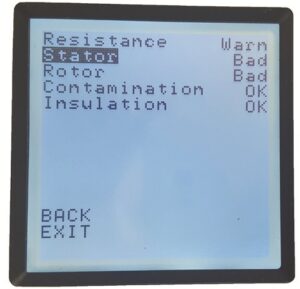
The motor shaft was then manually moved during the dynamic portion of the three-phase test, and at the end of the test, the instrument displayed the results (as shown in the picture on the right).
When the dynamic test was performed between phases 2-1, it became clear that the problem originated in that phase.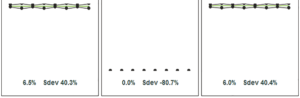
Conclusion
Owners/operators can reduce maintenance costs. A 17 kW, 400 V motor isn’t expensive, but if it’s mounted on a building roof and the owner has to rent a crane to lift it for installation and removal, the owner’s costs can become extremely high when it comes to maintenance and reliability.
If the hospital’s maintenance team had owned and used a motor circuit analyzer, such as the ALL-TEST PRO 5™ or ALL-TEST PRO 33 IND™, they would have immediately determined that the motor, not the VFD, was the “bad actor.”
Many hours were wasted ordering and installing a new VFD when it wasn’t the true cause of the problem. 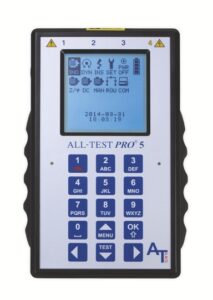
 Distributors and suppliers can improve quality control. Distributors and motor suppliers should implement additional quality control measures before delivering new or finished motors to their customers.
By taking 3 minutes to check the condition of motors, distributors and suppliers can avoid warranty issues and improve customer satisfaction.
About ALL-TEST Pro, LLC
ALL-TEST Pro delivers true electric motor maintenance and troubleshooting, offering innovative diagnostic tools, software, and support to keep your business running.
AT34™
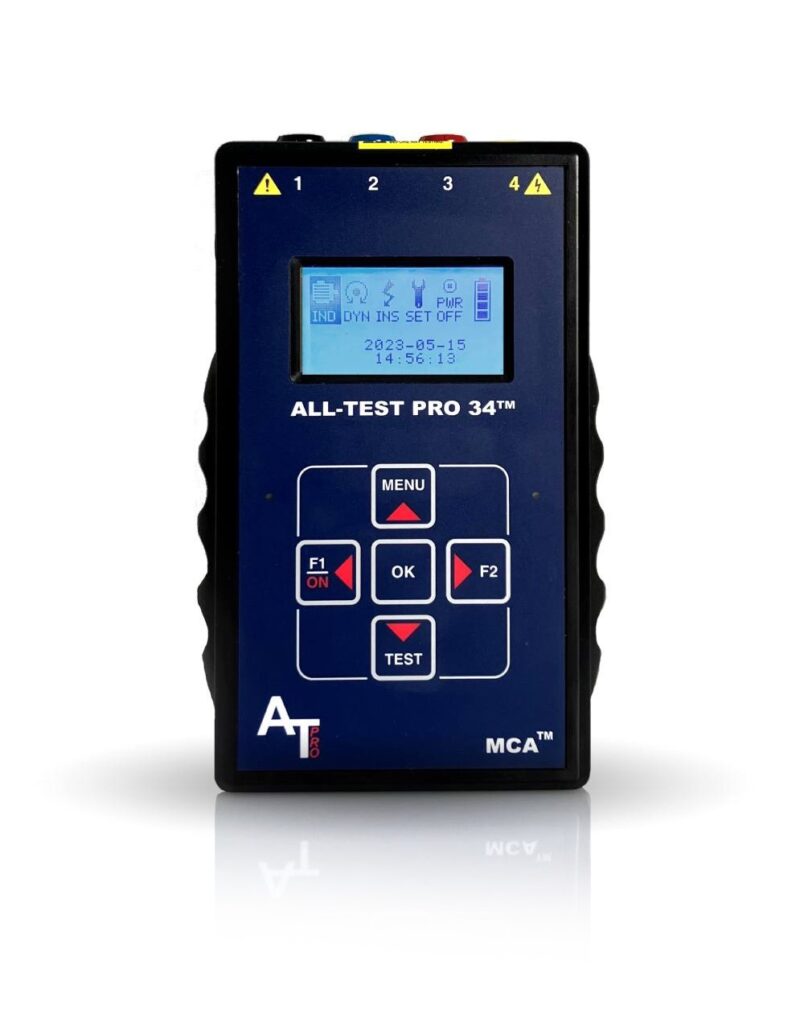
Анализируйте и отслеживайте целостность компонентов двигателя на предмет неисправностей заземления, внутренних повреждений обмоток, открытых соединений и загрязнений – и все это с помощью одного портативного устройства.

Международный онлайн-семинар по диагностике двигателей – уровень 1 – 11-15 ноября
Вы уже слышали? С 11 по 15 ноября мы будем проводить наш Семинар по диагностике двигателей мирового класса 1-го уровня. Это будет онлайн/виртуальный семинар, который начнется каждый день в 8 […]
Международный онлайн-семинар по диагностике двигателей – уровень 1 – 9-14 июня 2025 г.
Вы слышали? С 9 по 14 июня 2025 г. мы проведем наш Семинар по диагностике двигателей мирового класса 1-го уровня. Это будет онлайн/виртуальный семинар, который начнется каждый день в 8 […]