
Que valent pour vous 3 minutes de test moteur ?
The company
A motor distributor in the Netherlands supplied a 17-kilowatt, 400-volt motor to a local hospital in 2015. The hospital rented a portable crane to install the motor on the building’s roof. The motor was used to power a rooftop fan. In the spring of 2016, the motor suddenly stopped working. The motor distributor was then contacted for on-site intervention, troubleshooting, and support.
The challenge
The motor had been connected to a variable frequency drive (VFD), and when the motor stopped running, the hospital maintenance technician reset the VFD. The motor started, but unfortunately, the VFD stopped the motor again. The technician then performed a ground insulation test and determined that the motor winding was not shorted to ground. Using a digital multimeter, he measured the phase resistance and found that the phases were not open. The motor testing tools used by the technician indicated that the motor was “good,” so he decided to replace the VFD.
After the new VFD was installed, the engine started but did not continue to run. Much to the frustration of the technicians, who were experiencing the same problem, the hospital’s maintenance manager contacted the distributor who had supplied the engine to the hospital.
The distributor of reactive motors, which has a service center and support team, sent one of its technicians to the hospital to test the motor. The service center technician used a megohmmeter and a digital multimeter (DMM) to determine that the motor was not grounded and that the phases were not open, which was consistent with the results of previous tests. Since the motor still did not function, it was decided to replace it.
A crane was brought in to remove the motor from the hospital roof and allow for the installation of a replacement motor. The replacement motor started and operated normally, confirming that the new VFD was functioning as expected. The “suspect” motor was sent to the service center for further inspection.
The solution – 3-minute engine test at the service center
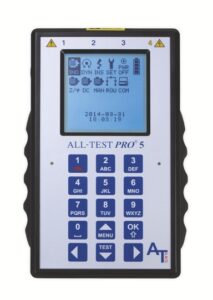
An ALL-TEST PRO 5™ (pictured right) was used to perform a non-destructive, de-energized Motor Circuit Analysis (MCA) test at the service provider’s premises. The motor circuit analysis assesses the condition of the electric motor, stator, and rotor connections in just a few minutes.
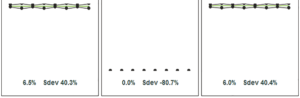
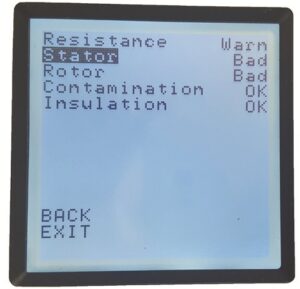
Using the AT5™, connections were made to the three phases of the motor and a static test was performed. Then, the motor shaft was moved manually during the dynamic part of the three-phase test and, at the end of the test, the instrument displayed the results (as shown on the right).
By performing the dynamic test between phases 2 and 1, it became clear that it was this phase that was causing the problem.
Conclusion
Owners/operators can reduce their maintenance costs. A 17 kW, 400 V motor is inexpensive, but when mounted on a building’s roof and the owner has to rent a crane to lift the motor for installation and removal, the cost to the owner can become extremely high in terms of maintenance and reliability. If the hospital maintenance team had owned and used a motor circuit analysis instrument such as the ALL-TEST PRO 5™ or the ALL-TEST PRO 33 IND™, they would have been able to immediately determine that the motor was the “bad actor” and not the variable frequency drive (VFD). Many hours were wasted ordering and installing a new VFD when it wasn’t the real cause of the problem.
Distributors and suppliers can improve quality assurance. Engine distributors and suppliers should implement an additional quality control measure before delivering new or ready-to-use engines to their customers. By spending three minutes checking the condition of engines, distributors and suppliers can avoid warranty issues and increase customer satisfaction.
About ALL-TEST Pro, LLC
ALL-TEST Pro delivers on its promise of true engine maintenance and troubleshooting, with innovative diagnostic tools, software and support that keep your business running.
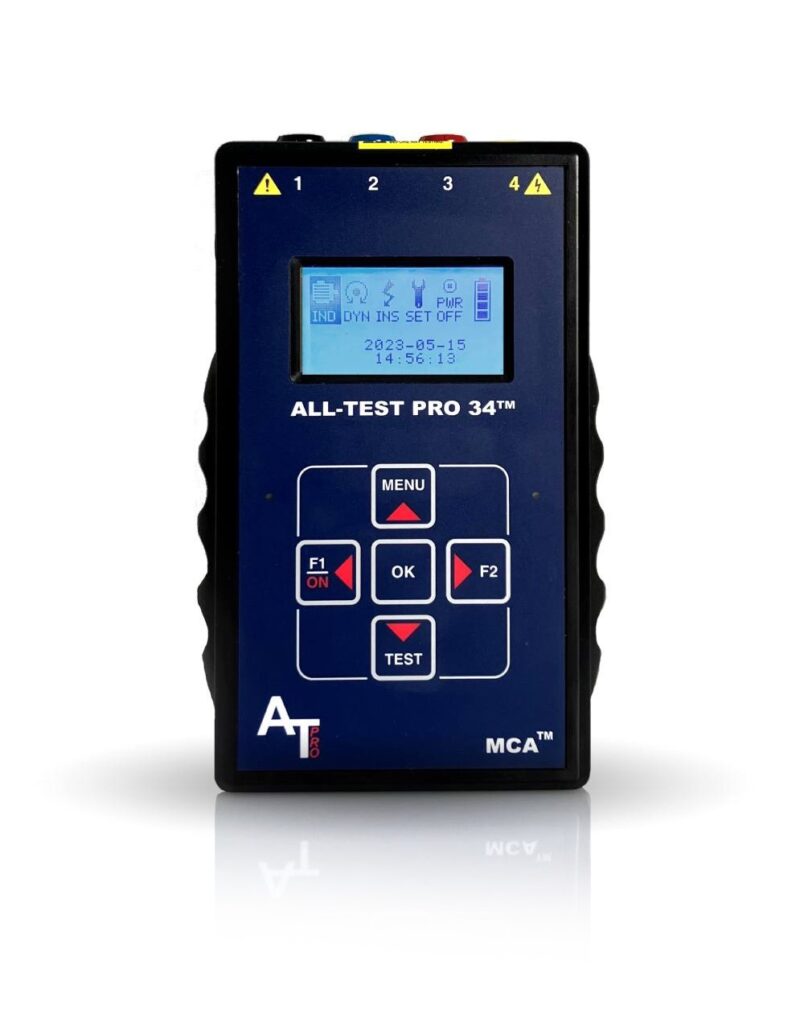
AT34™
Analyse et tendance de l’intégrité des composants du moteur pour les défauts de mise à la terre, les défauts de bobinage interne, les connexions ouvertes et la contamination – le tout avec un seul appareil portatif.

Séminaire en ligne sur le diagnostic automobile de classe mondiale – Niveau 1 – 12-16 juin
Avez-vous entendu ? Nous organisons notre séminaire de diagnostic automobile de niveau 1 du 12 au 16 juin. Il s’agit d’un séminaire en ligne/virtuel qui débutera chaque jour à 8 […]

Préconlub 15-16 juin 2023 Leon, Mexique
Venez rejoindre Gloria Urizar, directrice régionale de l’ATP pour la région LATAM, lors de sa présentation au Preconlub 2023 ! Plus d’informations : https://www.preconlub.com/ […]