
Les essais proactifs des moteurs protègent l’usine d’éthanol
Ethanol is a clean-burning fuel that has been used in the United States since the 1850s. Ford’s Model T was designed to run on ethanol, and although ethanol was banned during Prohibition, it gained popularity in the 1970s when gasoline prices were high and oil imports were a concern. Ethanol made a strong comeback when Congress introduced the Renewable Fuel Standard in 2005 to establish minimum requirements for the use of renewable fuels. Today, approximately 14 billion gallons of ethanol are added to gasoline consumed nationwide each year.
The company
Cardinal Ethanol est l’une des entreprises qui contribuent aux sources d’énergie renouvelable de l’Amérique. En 2008, Cardinal Ethanol a mis en service une usine de production d’éthanol alimentée au gaz naturel au cœur de la Corn Belt. Située dans l’Indiana, cette usine d’éthanol produit environ 100 millions de gallons d’éthanol par an, ainsi que 340 000 tonnes de drêches de distillerie séchées avec solubles qui sont distribuées à des entreprises produisant des aliments pour le bétail et la volaille.
L’application
Afin de produire 100 millions de gallons d’éthanol par an, l’usine doit s’assurer que ses équipements fonctionnent de manière fiable 24 heures sur 24, 7 jours sur 7. L’équipe de maintenance interne de l’usine d’éthanol prévoit des “arrêts planifiés” deux fois par an, une fois au printemps et une fois à l’automne, pour effectuer la maintenance des équipements et des machines fonctionnant dans l’usine. Pendant l’arrêt de l’automne 2015, quatre nouveaux moteurs ont été installés pour entraîner les bandes transporteuses qui acheminaient le maïs jusqu’à l’usine de traitement de l’éthanol.
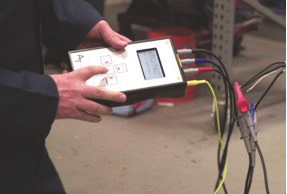
En décembre 2015, l’équipe de maintenance a remarqué que le flux de céréales était interrompu. Mark Durr, responsable du projet de maintenance de l’usine d’éthanol, a rapidement examiné le système de livraison des céréales et a déterminé que les interruptions du flux de céréales étaient dues à l’arrêt intermittent des convoyeurs. Mark a ensuite demandé à son équipe de maintenance interne d’effectuer plusieurs tests sur les quatre moteurs qui entraînent les convoyeurs de maïs.
“J’ai demandé à mes techniciens de tester les quatre moteurs, d’une puissance comprise entre 40 et 60 chevaux, et notre méga-ohmmètre a montré que les bobines étaient en bon état, qu’il n’y avait pas de court-circuit et que rien n’allait à la terre”, explique Mark. “Lorsque nous avons utilisé le ALL-TEST PRO 33 IND™, cet instrument de test des moteurs nous a montré que les rotors étaient mauvais.”
Résultats des tests
Mark a immédiatement contacté l’entrepreneur général qui avait installé les moteurs pour l’informer de sa découverte. L’entrepreneur était curieux de savoir si Mark avait conclu à un problème avec les rotors. Les moteurs étaient neufs et l’entrepreneur ne pouvait pas croire que les quatre moteurs auraient des problèmes de rotor. Lorsqu’on lui a demandé comment il était arrivé à cette conclusion que les rotors étaient la cause première du problème, Mark a expliqué à l’entrepreneur qu’il disposait d’un AT33™, qui est un instrument de test de moteur hors tension qui montre l’état complet à la fois des enroulements du stator et du rotor.
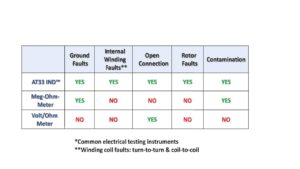
“I bought the AT33™ motor test instrument a little over a year ago, shortly after I started working at this plant. We focus on preventative maintenance to keep this plant running smoothly, and that means having the right tools to avoid plant downtime,” says Mark. “When you have a problem with a motor, a megohmmeter, a multimeter, and an LCR (L-inductance, C-capacitance, R-resistance) meter aren’t going to tell you if there’s a problem with a rotor, but an AT33™ will.”
After the engine test results were communicated to the contractor, they arranged for the replacement of the engines, which were under warranty. The engines that had been tested with the AT33™ were sent to the contractor’s service center for disassembly and inspection. Service center technicians confirmed that the rotors were indeed the cause of the engines’ failure to operate as intended.
“The service center report, confirming that the rotors were defective, didn’t surprise me,” Mark explains. “We’ve used the AT33™ with great success on several engines because we know that more common testers don’t have the ability to show rotor health. That’s one of the main reasons I bought the AT33™, because of its ability to test the rotor. In this case, it proved very useful.”
Conclusion
The motors must be tested before installation.
It is essential to inspect new and stored motors before installing them in a system. Spending a few minutes testing a motor before installation can save thousands of euros in maintenance costs and, in some cases, downtime costs.
The AT33™ off-power motor test instrument, which performs static and dynamic tests, is a proven asset for revealing the complete condition of the motor’s rotor and stator windings and also helps the maintenance technician or operator understand if there are any contamination, connection, or grounding fault issues.
About ALL-TEST Pro, LLC
ALL-TEST Pro delivers on its promise of true engine maintenance and troubleshooting, with innovative diagnostic tools, software and support that keep your business running.
About Cardinal Ethanol
Originally founded by 12 members from Randolph County, Indiana, the Cardinal Ethanol Project was officially organized in February 2005 with the intention of planning, constructing, and operating a 100 million dry gallon corn processing plant for the benefit of investors, farmers, and the community.
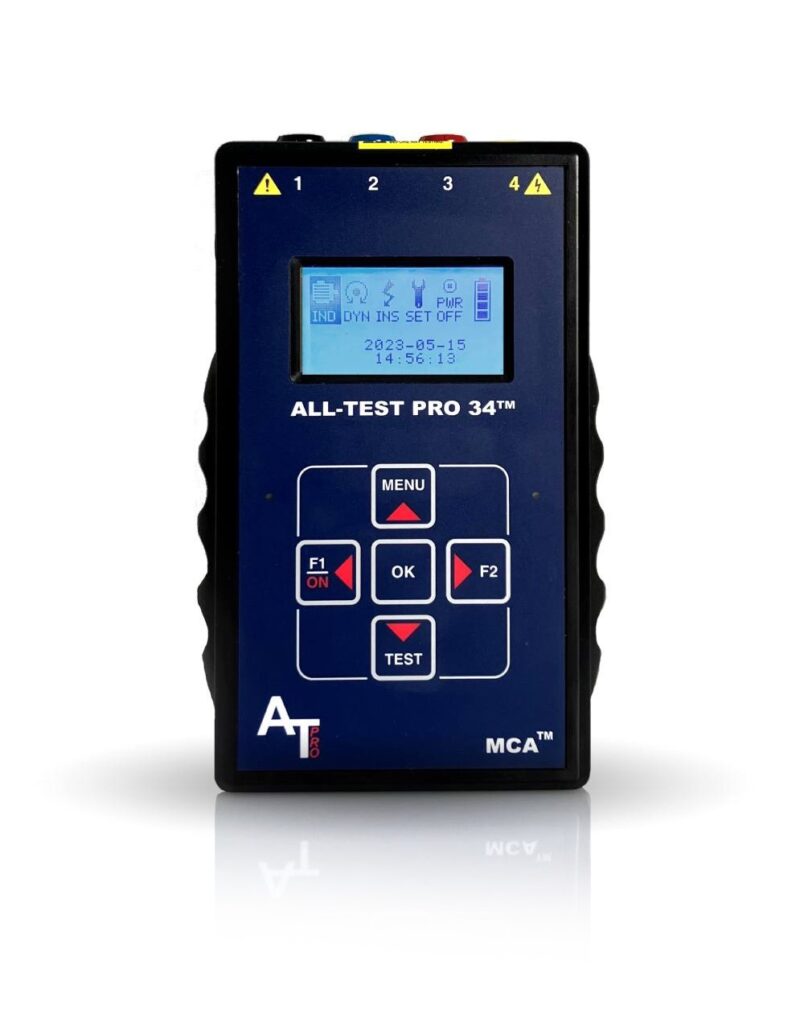
AT34™
Analyse et tendance de l’intégrité des composants du moteur pour les défauts de mise à la terre, les défauts de bobinage interne, les connexions ouvertes et la contamination – le tout avec un seul appareil portatif.

Séminaire en ligne sur le diagnostic automobile de classe mondiale – Niveau 1 – 12-16 juin
Avez-vous entendu ? Nous organisons notre séminaire de diagnostic automobile de niveau 1 du 12 au 16 juin. Il s’agit d’un séminaire en ligne/virtuel qui débutera chaque jour à 8 […]

Préconlub 15-16 juin 2023 Leon, Mexique
Venez rejoindre Gloria Urizar, directrice régionale de l’ATP pour la région LATAM, lors de sa présentation au Preconlub 2023 ! Plus d’informations : https://www.preconlub.com/ […]