
การทดสอบมอเตอร์ 3 นาทีคุ้มค่ากับคุณแค่ไหน?
company
A motor distributor in the Netherlands donated a 17 kW, 400-volt motor to a local hospital in 2015. The hospital rented a mobile crane to install the motor on the building’s roof. The motor was used to control roof-mounted fans. In the spring of 2016, the motor suddenly stopped working, so the hospital contacted the distributor for field service, troubleshooting, and on-site support.
Challenges
The motor was connected to a variable frequency drive (VFD), and when the motor stopped, the hospital maintenance technician reset the VFD. The motor started again, but unfortunately, the VFD shut the motor off again. The technician then performed an insulation test to ground and found that the motor windings were not short-circuited to ground. They then used a DMM (digital multimeter) to measure phase resistance and learned that the phase was not open. The motor testing equipment the technician used pointed to a “good” motor, so they decided to replace the VFD.
After the new VFD was installed, the motor started but then wouldn’t continue running, much to the frustration of the technicians. They encountered the same problem, forcing the hospital’s maintenance manager to contact the supplier of the motors to the hospital.
A responsive motor supplier with a service center and support staff sent a technician to the hospital to test the motor. The service center technician used a megaohm meter and a digital multimeter (DMM) to check that the motor was not grounded and the phase was not open, consistent with previous tests. Since the motor still wouldn’t work, it was decided to replace it.
A crane was brought in to remove the motor from the hospital roof and a replacement motor was installed. The replacement motor started and operated normally, confirming that the new VFD was working as intended. The “suspect” motor was sent to a service center for more detailed inspection.
Troubleshooting step – Test the motor for 3 minutes at a service center.
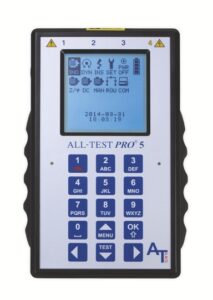
ALL-TEST PRO 5™ (pictured on the right) is used to perform energy-saving, non-destructive motor circuit analysis (MCA) testing at the service provider’s facility. The motor circuit analysis evaluates the condition of the motor’s electrical connections, stator, and rotor in just minutes.
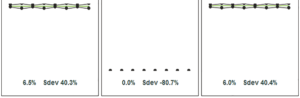
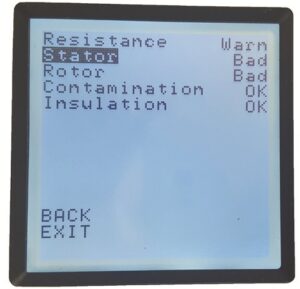
When using the AT5™, a three-phase motor is connected and a static test is performed. The motor shaft is then manually moved during the dynamic portion of the three-phase test, and at the end of the test, the instrument displays the results (as shown on the right).
When dynamic testing was performed between phase 2 and phase 1, it became clear that this was the problematic phase.
Summary
Owners/operators can reduce maintenance costs. A 17kW 400V motor isn’t expensive, but when installed on a building’s roof, and the owner has to rent a crane to lift the motor for installation and removal, it adds to the owner’s expenses. Maintenance and reliability can be very costly in this regard. If the hospital’s maintenance team owned and used motor circuit analysis tools such as ALL-TEST PRO 5™ or ALL-TEST PRO 33 IND™, they could have immediately identified the motor as the “faulty” actor, and not the VFD. Ordering and installing a new VFD wastes hours when it wasn’t the root cause of the problem.
Distributors and suppliers can improve their quality assurance. They should implement additional quality control measures before shipping new or off-the-shelf motors to their customers. Taking just 3 minutes to inspect the motor’s condition will help distributors and suppliers avoid warranty issues and increase customer satisfaction.
About ALL-TEST Pro, LLC
ALL-TEST Pro provides true motor maintenance and troubleshooting with innovative diagnostic tools, software, and support, helping you keep your business running smoothly.
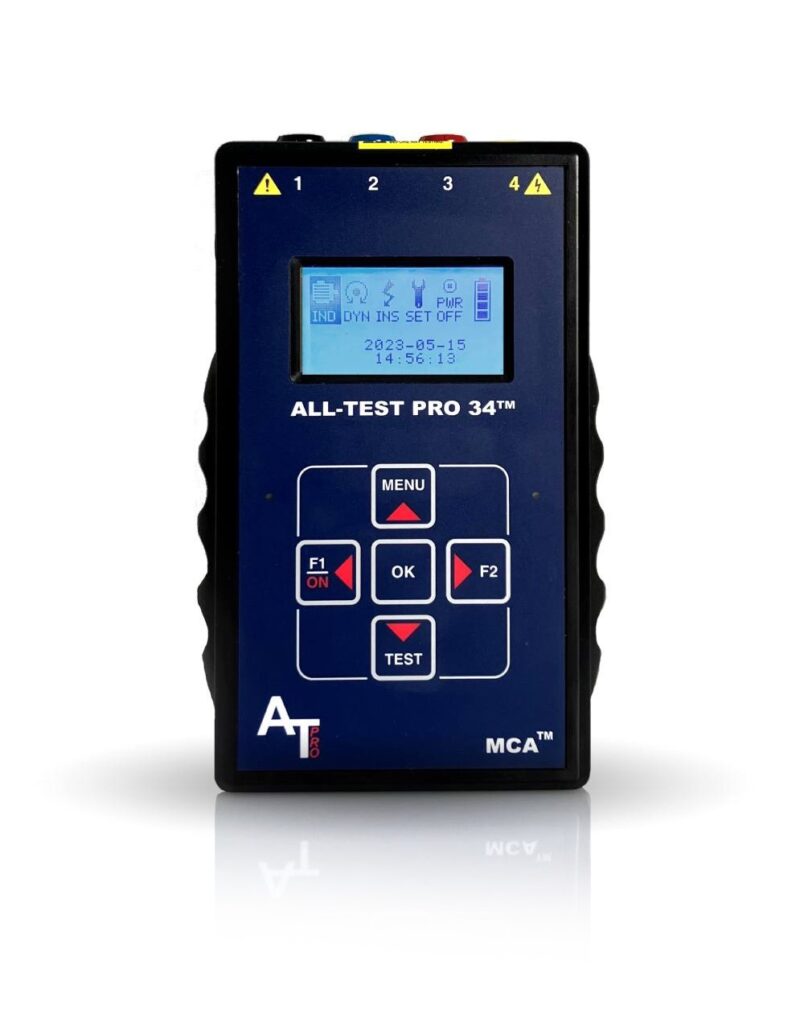
AT34™
วิเคราะห์และแนวโน้มความสมบูรณ์ของส่วนประกอบมอเตอร์สำหรับความผิดปกติของกราวด์ ความผิดปกติของขดลวดภายใน การเชื่อมต่อแบบเปิด และการปนเปื้อน – ทั้งหมดนี้ทำได้ด้วยอุปกรณ์มือถือเครื่องเดียว