
Electrical Signature Analysis (ESA)
Electrical Signature Analysis (ESA) is a method that captures data from all three phases of voltage and current at the same time. This data is used to create a power quality table, giving a detailed view of the electrical power going to or coming from a device.
ESA records 50 milliseconds of voltage and current waveforms for all three phases, storing and displaying this information as time-based graphs. These visual graphs often reveal issues in the incoming power that might not show up through numerical data alone.
These techniques are used while the motor is operating (“energized testing”), allowing for a real-time assessment. This method is effective for diagnosing problems in a wide range of motors, including AC induction motors, DC motors, generators, wound rotor motors, synchronous motors, and machine tool motors.
How Does ESA Work?
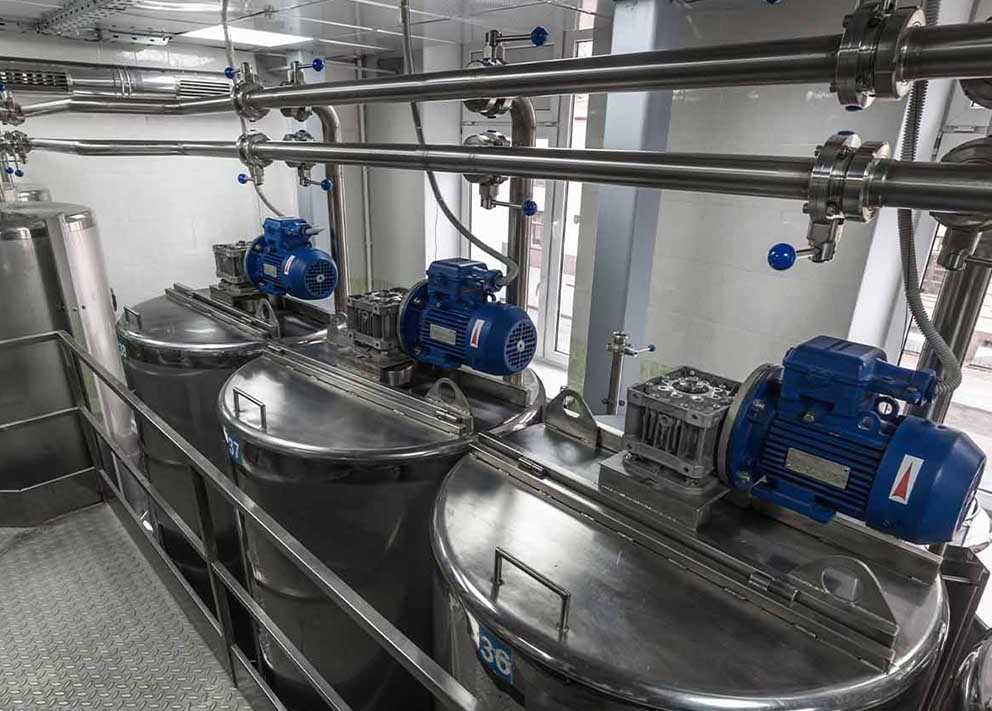
Electrical Signature Analysis (ESA) uses the motor’s voltage and current to detect issues anywhere within the motor system. This includes everything from incoming power to internal motor components, and even faults within the driven process itself.
To perform an ESA test, basic motor information is required. This includes the nameplate data: voltage, running speed, full load current, and horsepower (or kilowatts). For more detailed analysis, optional information such as the number of rotor bars and stator slots, bearing numbers, or specific load data (like blade count for pumps or tooth count for gearboxes) can also be entered.
ESA software captures a short time window of voltage and current waveforms and applies a mathematical process called the Fast Fourier Transform (FFT). The FFT converts these waveforms into a frequency-based spectrum, which the software then analyzes to detect abnormalities. This spectral analysis helps identify issues in the power supply, motor control, motor components, or connected mechanical systems.
By tracking these signals over time, ESA supports condition-based and predictive maintenance strategies. It can also help identify active faults that may be causing overheating, system shutdowns, or other performance issues.
Faults within the motor or its connected machine typically show up as changes—or “modulation”—in the current. On the other hand, problems in the incoming power supply tend to appear as modulation in the voltage waveform.
A key distinction between Motor Current Signature Analysis (MCSA) and ESA is that MCSA analyzes only the current waveform. ESA, in contrast, uses both voltage and current data. This dual-input approach allows ESA to more accurately determine whether a fault originates from the power source or from within the motor system.
ESA software displays the FFT results for voltage and current side by side, making it easier to compare and pinpoint the source of a problem. It also uses proprietary algorithms to perform advanced power quality and motor system diagnostics.
One of ESA’s biggest advantages over traditional vibration analysis is its ability to detect faults earlier. Unlike vibration sensors, which are affected by machine mass, stiffness, and frequency limitations, ESA is not influenced by these physical factors. Since ESA monitors electrical current, which directly reflects the motor’s load and condition, it offers a more consistent and reliable diagnostic signal—regardless of the size or construction of the machinery.
The need for energized equipment testing
In many industrial settings, machines and motors operate continuously—24 hours a day, 7 days a week, 365 days a year—to keep production on track. This constant operation places heavy stress on electrical systems, especially in manufacturing facilities and automated production lines.
For situations where motors must remain energized, ALL-TEST Pro provides handheld diagnostic tools designed for safe testing while equipment is still running. This is critical because certain faults only appear during operation and may not be detectable when the motor is powered off.
While testing energized equipment should always be performed by trained personnel, ALL-TEST Pro’s patented ALL-SAFE™ technology makes it possible for general maintenance staff to safely and easily monitor motor-driven systems. These tools offer a fast, convenient way to gather real-time information between scheduled inspections.
Using simple controls and intuitive software, technicians can quickly compare current motor behavior with baseline performance, helping them evaluate equipment condition without interrupting operations. Rather than waiting for an unexpected failure or system shutdown, ALL-TEST Pro tools help detect early warning signs of trouble—reducing the risk of injury and enabling smarter maintenance decisions.
Energized testing is especially valuable as motors begin to wear over time due to exposure to heat, moisture, vibration, and airborne contaminants like dust. Whether equipment is located indoors or outdoors, ALL-TEST Pro devices can detect key issues such as:
- Voltage or current imbalances
- Harmonic distortion
- Poor power factor
- Mechanical problems (bearings, gearboxes, impellers, belt and pulley, static/dynamic eccentricity, etc)
By identifying these problems early, ALL-TEST Pro helps teams improve reliability, extend equipment life, and avoid costly downtime.
The Importance of ESA
Identifying and correcting a motor fault before it leads to failure can save your organization valuable time and thousands of dollars in avoided downtime and repairs. In many cases, the savings from a single avoided breakdown can immediately justify the investment in proper diagnostic tools.
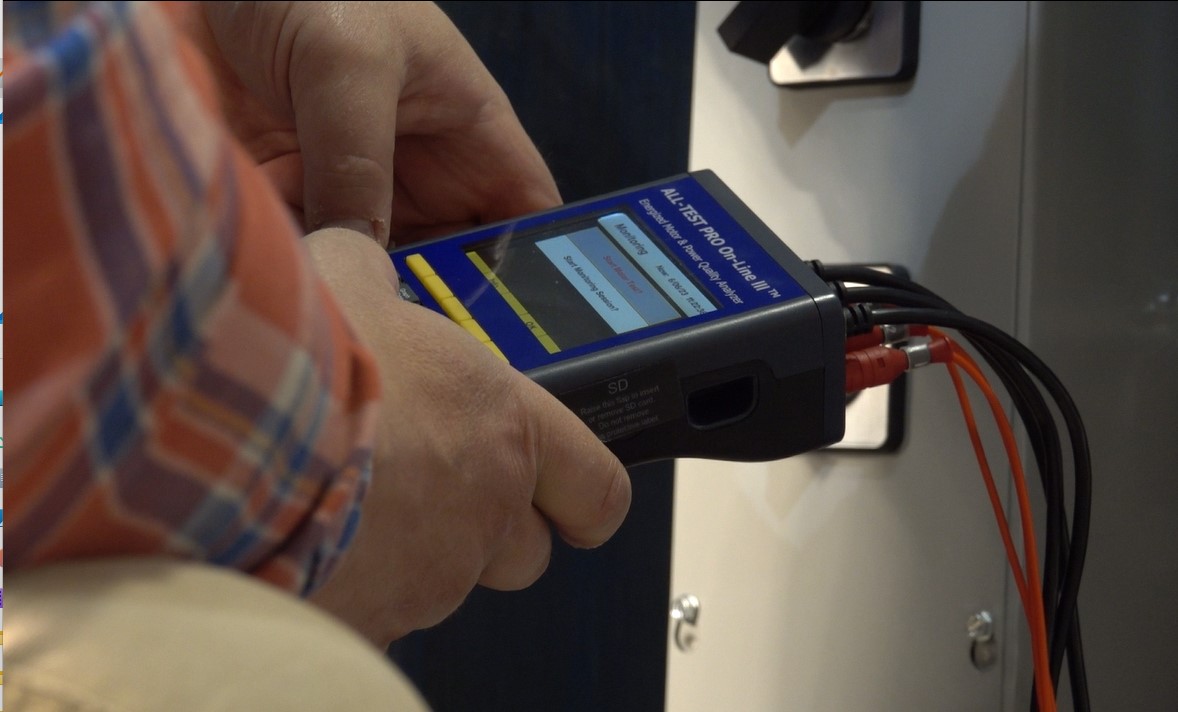
ALL-TEST Pro’s ESA tester combines two powerful instruments in one compact device: a complete Power Quality Analyzer (PQ) and a full-featured Electrical Signature Analyzer (ESA). In PQ mode, the device can perform energy logging, harmonic analysis, voltage and current waveform monitoring, and capture power disturbances such as sags, swells, transients, and other electrical events.
Our motor testing technology is unmatched in its versatility and ease of use. The instruments are portable, battery-powered, and designed for safe operation, making them ideal for use in the field, on the shop floor, or at service centers, including hard-to-reach locations.
With ALL-TEST Pro tools, technicians can quickly diagnose issues, reduce troubleshooting time, and take proactive steps to avoid unexpected motor failures. This not only protects your equipment but also helps prevent production delays, equipment damage, and costly emergency repairs.
Applications of ESA Equipment
ESA testers and equipment are effective for acquiring data that is normally dangerous to access. Instead of disassembling machines, installations make it possible to test multiple systems in a single day with safety protocols in mind.
ALL-TEST Pro energized testing equipment is suitable for the following motor builds and functions:
- AC/DC Motors
- VFD Applications
- Generators
- Traction Motors
- Machine Tool Motors
- Gearboxes
- Pumps and Fans
- Reliability Testing
- Commissioning Testing
- Troubleshooting
- Energy Evaluation
The ALL-TEST Pro Promise
ALL-TEST Pro is committed to ensuring the reliability of your businesses’ motors to maximize optimal productivity of maintenance teams everywhere. Our equipment is used in commercial, government and military institutions worldwide. Applications include AC/DC electric motors, transmission, distribution transformers, machine tool motors, servo motors, AC/DC traction motors and more.