
การวินิจฉัยความผิดปกติของไดนาโมมิเตอร์ที่โรงงานยานยนต์
Description
Location: Truck powertrain manufacturing plant in the Midwest. Dynamometer Motor: 200 hp. Specialty motors and dynamometer drives. Affected 480-volt system: In-process final inspection. 8% of capacity impacting failure cost: > $125,000 in equipment, excluding manufacturing, shipping, and manpower. > $500,000 in equipment, excluding manufacturing, shipping, and manpower.
A specialized dynamometer system failed at a truck powertrain plant in the Midwest during the final testing phase of the production line. The malfunction damaged sensitive drivetrain equipment worth over $125,000 during production, resulting in an unplanned shutdown of 8% of the final test production area.
Basic reading
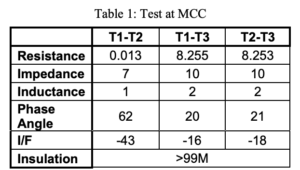
Use ALL-TEST IV PRO 2000 to identify the cause of the fault. The first test is performed at the Motor Control Center (MCC) and identifies severe short circuits (I/F and phase angle) and loose connections (resistance):
Following standard practice, the motor was tested at the motor junction box with the following positive results:
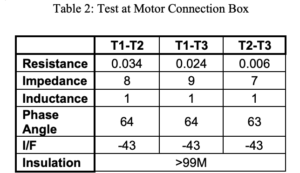
This indicates that the fault lies with the cable. Upon inspection, the connection was found to be improperly crimped, resulting in a loose connection. This caused the cable insulation to break and fail. The fault caused a direct short circuit, resulting in serious damage to the drive. Note that the cable was not grounded.
Next step
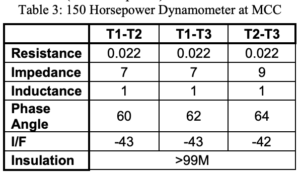
A motor circuit analysis (MCA) was not performed on the dynamometer system prior to the cable failure. The system was added to the plant’s reliability program, and several other dynamometer cables were found to be in similar condition. One dynamometer motor (150 hp) was found to have a shorted coil:
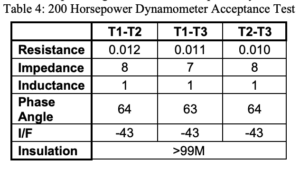
The final testing procedure is very important, so the reliability department adds acceptance testing procedures to all new and refurbished dynamometer motors. An example of a good test for a new 200 horsepower dynamometer motor is as follows:
Avoiding expenses
Early detection and correction of other defects can avoid equipment costs of at least $500,000 if failures occur in the same manner as the first 200-horsepower dynamometer. Each dynamometer failure reduces the plant’s production capacity by 8% during the final testing phase.
Lessons learned
Critical motor inspections in a plant identify key equipment that needs to be included in a reliability program. Motor circuit analysis using ALL-TEST IV PRO 2000 can be used to provide incoming inspection, trend analysis, and troubleshooting capabilities rarely found in predictive maintenance equipment. Identifying loose connections, cable defects, and winding faults often provides a quick return on investment for the program.
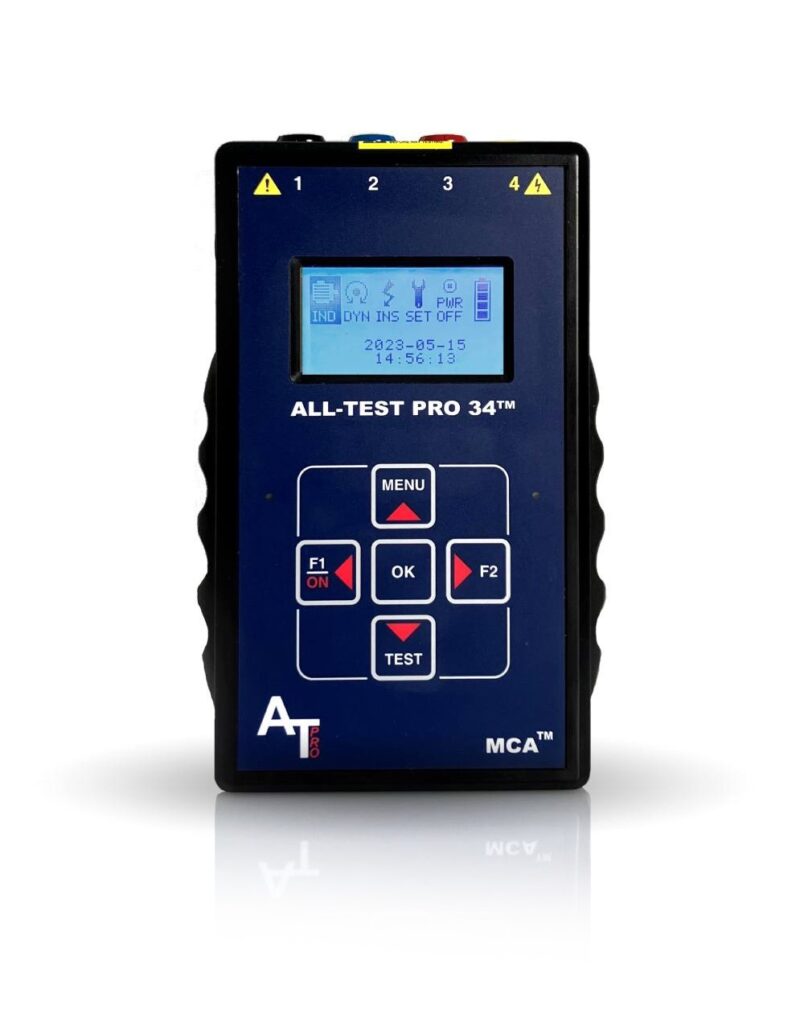
AT34™
วิเคราะห์และแนวโน้มความสมบูรณ์ของส่วนประกอบมอเตอร์สำหรับความผิดปกติของกราวด์ ความผิดปกติของขดลวดภายใน การเชื่อมต่อแบบเปิด และการปนเปื้อน – ทั้งหมดนี้ทำได้ด้วยอุปกรณ์มือถือเครื่องเดียว